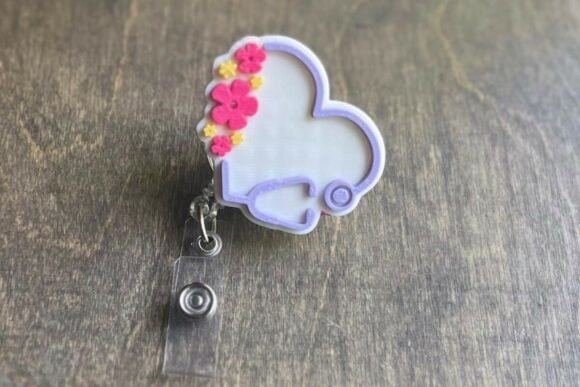
Spring Stethoscope Badge Reel STL 3D Model for 3D Printing
Nursing and healthcare professions are defined by long shifts, high-stakes environments, and a constant need for professional identification. For many medical professionals, the badge reel is not just a functional tool; it is a canvas for self-expression. As seasons change, so do the aesthetics of our workplace attire. The Spring Stethoscope Badge Reel STL 3D Model for 3D Printing offers a unique solution for nurses, doctors, and allied health professionals who wish to inject a bit of seasonal cheer into their daily routine without compromising on utility or durability.
This digital asset allows users to create a custom, floral-themed topper that attaches seamlessly to standard badge reels. By combining practical design with aesthetic appeal, this 3D model addresses the common desire among healthcare workers to personalize their gear while maintaining a professional appearance. Whether you are looking to brighten up your scrubs for the spring season or seeking a thoughtful, DIY gift for a colleague, this printable model provides a versatile and engaging project.
Understanding the Design and Functionality
The core challenge in personalizing badge reels often lies in finding accessories that are both visually striking and robust enough to withstand the rigors of a hospital environment. Cheap plastic attachments can break easily, and generic decorations may look out of place in a clinical setting. The Spring Stethoscope Badge Reel STL file solves these issues through its specific geometric design.
The model features a stethoscope motif adorned with floral elements, creating a symbol that resonates deeply with the medical community. It is designed to be lightweight yet sturdy, ensuring that it does not add unnecessary bulk to your badge clip. The dimensions are carefully considered: the height is approximately 1.6 inches and the width is about 2 inches, proportions that are large enough to be noticeable but small enough to remain unobtrusive. Furthermore, the back of the topper is 3mm thick, providing ample surface area for adhesion, while additional pieces measure 2mm thick. These measurements can be adjusted directly within your slicing software, allowing for fine-tuning based on your specific printer’s capabilities or personal preference for fit.
Customization and Color Options
One of the most significant advantages of using an STL file for 3D printing is the ability to customize colors to match individual style or institutional dress codes. With the Spring Stethoscope Badge Reel STL 3D Model for 3D Printing, you are not limited to a single palette. You can select filaments that complement your favorite spring colors, such as pastel pinks, soft greens, or bright yellows.
This level of customization is particularly useful for team coordination. For instance, a nursing unit preparing for a charity walk or a spring-themed hospital event can print multiple toppers in matching colors to foster a sense of unity and spirit. Alternatively, individuals can choose colors that coordinate with their specific scrub sets, creating a polished and cohesive look. The flexibility to mix and match colors also extends to multi-material printing. If you have access to a printer capable of handling multiple extruders, you can create complex color gradients or distinct contrasts between the stethoscope tubing and the floral accents, adding depth and visual interest to the final piece.
Technical Specifications and Assembly
For those new to 3D printing, understanding the file structure is crucial for a successful print. The download package typically includes a ZIP folder containing two distinct types of files to accommodate different printing strategies:
- AMS-Compatible Folder: This folder contains a pre-assembled version of the badge topper, optimized for Automatic Material System (AMS) printers. This option is ideal for users who want a quick, hassle-free print with minimal post-processing. The AMS allows for seamless color changes, resulting in a vibrant, multi-colored topper right off the build plate.
- Individual STL Files: For users with single-extruder printers or those who prefer greater control over the assembly process, separate STL files are provided for each component. This approach requires printing the parts individually and then assembling them using super glue or a strong adhesive. While this method demands more time and effort, it offers precise control over orientation and support structures, which can improve print quality for intricate details.
Regardless of the assembly method chosen, the design ensures compatibility with standard badge reels. The attachment mechanism is engineered to snap or adhere securely, preventing loss during busy shifts. However, it is important to note that if you opt for the individual piece assembly, you will need to apply appropriate adhesives to ensure the components bond firmly under daily use.
Practical Applications and User Considerations
The Spring Stethoscope Badge Reel STL 3D Model for 3D Printing serves various practical purposes beyond mere decoration. For educators in nursing programs, it can serve as a tangible example of how 3D printing intersects with healthcare innovation. Students can learn about design constraints, material selection, and the importance of ergonomics in medical equipment design.
For experienced 3D printing enthusiasts, this model offers a manageable project that yields a highly usable result. Unlike large-scale prints that require days of printing time, this topper can be completed relatively quickly, making it an excellent choice for weekend projects. The outcome is a durable accessory that can withstand the wear and tear of frequent clipping and unclipping from lab coats and scrubs.
When considering implementation, users should keep a few tips in mind. First, always review your slicer settings before printing. Adjusting infill density can enhance durability without significantly increasing print time. A standard 15-20% infill is usually sufficient for a part of this size. Second, consider the filament type. PLA is recommended for its ease of use and vibrant color options, though ABS can be used if higher heat resistance is required. Finally, pay attention to layer adhesion, especially if assembling printed parts, as weak bonds can lead to failure under stress.
Conclusion
Incorporating personal style into professional attire can boost morale and create a more welcoming atmosphere in healthcare settings. The Spring Stethoscope Badge Reel STL 3D Model for 3D Printing bridges the gap between functionality and fashion, offering a creative outlet for medical professionals. By leveraging the power of 3D printing, users can produce durable, customizable, and aesthetically pleasing accessories that reflect their personality and professionalism. Whether printed as a single colorful piece or assembled from individual components, this model provides a rewarding experience for anyone looking to add a fresh, floral touch to their workday essentials.