Simple Mobile Stand 3D Printable STL
In an era where digital presence is paramount, the physical tools we use to manage our workflows are often overlooked. For professionals, creators, and hobbyists alike, the smartphone has evolved from a communication device into a primary workstation component. Whether for monitoring live streams, participating in video conferences, or referencing notes during content creation, the need for a stable, hands-free viewing solution is constant. Enter the Simple Mobile Stand 3D Printable STL, a design that prioritizes utility over ornamentation. This article provides a detailed evaluation of this specific 3D model, analyzing its structural integrity, printing feasibility, and practical application in modern workspaces.
The Philosophy of Minimalist Utility
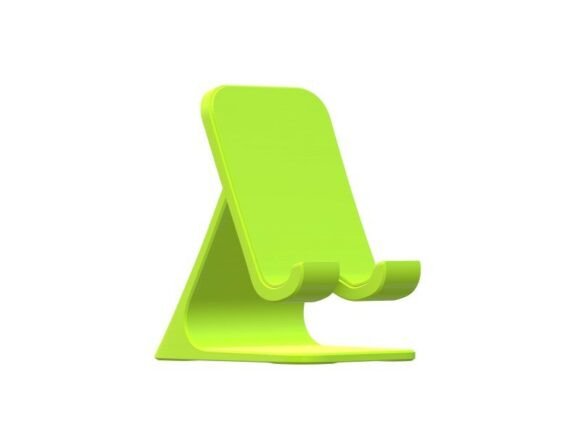
The core appeal of the Simple Mobile Stand 3D Printable STL lies in its adherence to functional minimalism. In industrial design and product engineering, the principle of "form follows function" suggests that the shape of a building or object should be primarily based upon its intended purpose or function. This STL file embodies that philosophy entirely. Unlike complex phone holders that require intricate mechanisms, adjustable arms, or multiple moving parts, this design relies on geometry alone to achieve stability.
For the serious hobbyist or the professional looking to optimize their desk setup, complexity often introduces points of failure. A stand with hinges, sliders, or collapsible joints requires precise tolerances and durable materials to prevent wobbling or breakage under load. By stripping away these elements, the Simple Mobile Stand 3D Printable STL reduces mechanical risk. It offers a static, rigid structure that does not degrade over time due to wear and tear on moving components. This makes it particularly suitable for environments where reliability is non-negotiable, such as a busy office or a high-traffic retail display area.
Structural Integrity and Printing Efficiency
One of the most significant advantages of this particular STL model is its construction as a single solid piece. From a manufacturing perspective, this is a major efficiency gain. Traditional injection-molded products often consist of multiple parts that must be assembled, glued, or snapped together. In contrast, the one-piece design of the Simple Mobile Stand 3D Printable STL eliminates assembly errors and ensures uniform material density throughout the object.
This monolithic structure also translates directly to the 3D printing process. The model is engineered to require no supports, a critical factor for both FDM (Fused Deposition Modeling) and resin printers. Supports are not merely extra material; they represent additional print time, post-processing labor, and potential surface damage when removed. By designing a geometry that self-supports during layer deposition, the creator of this STL has optimized it for speed and ease of use. Beginners who may be intimidated by support generation and removal will find this aspect particularly welcoming, while experienced users will appreciate the reduced machine uptime.
- No Support Structures: Reduces print time and eliminates the need for tedious cleanup.
- Single Piece Construction: Ensures structural consistency and removes assembly steps.
- Universal Compatibility: Designed to accommodate a wide range of smartphone dimensions without adjustment mechanisms.
Performance in Real-World Scenarios
To understand the true value of the Simple Mobile Stand 3D Printable STL, one must examine its performance in daily use. The primary metric for any phone stand is stability. A wobbly stand can lead to dropped devices, damaged screens, or interrupted video calls. Due to its low center of gravity and broad base, this design provides a secure platform for most mid-weight smartphones. However, users should note that extreme tilting or accidental bumps can still dislodge a device if it lacks sufficient friction against the stand’s cradle.
For remote workers, the angle provided by this stand is generally conducive to eye-level viewing, which helps reduce neck strain during long meetings. While it may not offer the infinite adjustability of a premium articulated arm, the fixed angle is often sufficient for standard desk setups. Furthermore, the clean lines and unobtrusive profile make it aesthetically pleasing in professional settings. It does not draw attention to itself, allowing the focus to remain on the content displayed on the screen rather than the hardware holding it.
In educational or studio environments, the stand serves as a reliable reference tool. Teachers can keep lesson plans visible, musicians can display sheet music or tablature, and artists can monitor reference images. The simplicity of the design means there are no buttons to press or locks to engage, making it intuitive for anyone to pick up and use immediately. This frictionless user experience is a subtle but powerful feature in productivity-focused tools.
Material Considerations and Durability
While the STL file dictates the geometry, the end-user determines the longevity through material selection. Because the Simple Mobile Stand 3D Printable STL is designed for both FDM and resin printing, users have flexibility in choosing their medium.
For those using FDM printers, PLA (Polylactic Acid) is a common choice due to its ease of printing and rigidity. However, PLA can become soft at relatively low temperatures, so placing the stand near heat sources like laptop vents or radiators should be avoided. PETG or ABS would offer greater thermal resistance and durability for heavy-use scenarios. Resin printers, on the other hand, produce stands with smoother surface finishes and higher dimensional accuracy. This can result in a more refined aesthetic and potentially tighter tolerances for phone placement, though resin prints may require post-curing and washing to achieve full strength.
Regardless of the material, the one-piece nature of the stand means that stress is distributed evenly across the base and the backrest. There are no weak points created by seams or joints. This makes the stand surprisingly robust for its size. Even if printed with a lower infill percentage, the geometric design compensates for minor material deficiencies, ensuring that the stand remains functional even for budget-conscious printers.
Who Benefits Most?
The target audience for the Simple Mobile Stand 3D Printable STL is broad, but certain groups will derive the most immediate value. Freelancers and bloggers who frequently record video content or conduct interviews benefit from having a dedicated, always-ready mounting solution. Instead of searching for books or makeshift props to prop up a phone, they can simply place it on the stand, ensuring consistent framing and stability.
Educators and presenters also find utility in this tool. Having a secondary screen for teleprompter text, slide previews, or audience questions keeps the presentation flowing smoothly. The minimalist design ensures that the stand does not distract from the speaker or the main visual aids. Additionally, small business owners who use their phones for inventory management or customer service can integrate the stand into their workflow, keeping the device accessible without cluttering the counter or desk.
For the 3D printing community itself, this STL serves as an excellent introductory project. Its success rate is high, requiring minimal troubleshooting. New printer owners can test bed adhesion, first-layer quality, and general calibration by printing this simple object. If the stand holds a phone securely without wobbling, it indicates that the printer is functioning correctly. Thus, it acts as both a useful tool and a diagnostic benchmark.
Potential Limitations and Considerations
No design is without its constraints. The fixed angle of the Simple Mobile Stand 3D Printable STL may not suit every user’s preference. Some individuals may prefer a flatter angle for reading or a steeper angle for watching videos. While this limitation exists, it is inherent to the one-piece, no-support design philosophy. Users seeking adjustability would need to look toward more complex models, which come with increased print times and potential failure points.
Additionally, the fit for very large phablets or phones with bulky cases may vary. It is advisable for users to measure their devices before printing or to scale the STL slightly in their slicing software if necessary. Similarly, extremely heavy tablets may exceed the weight capacity of a standard desktop-sized stand, regardless of material strength. For tablet use, a larger variant or a reinforced design would be more appropriate.
Conclusion
The Simple Mobile Stand 3D Printable STL represents a thoughtful intersection of design efficiency and practical utility. By focusing on a single, solid form that requires no supports, it removes the barriers to entry for new 3D printing enthusiasts while providing a reliable tool for seasoned professionals. Its ability to enhance productivity in home offices, corporate environments, and creative studios makes it a versatile asset. While it lacks the adjustability of high-end commercial alternatives, its simplicity, durability, and ease of production offer a compelling value proposition. For anyone seeking a straightforward, effective way to integrate their smartphone into their daily workflow, this STL file is a worthy addition to their digital library.