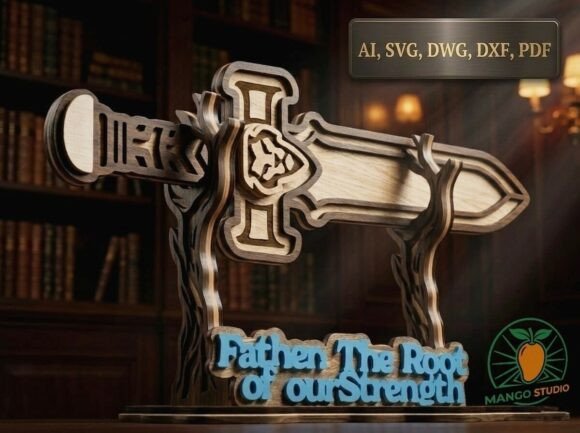
3D Sword Stand Father s Day Laser Cut
Integrating a 3D Sword Stand Father s Day Laser Cut design into your production workflow requires more than just sending a file to the machine. It involves understanding material compatibility, layering precision, and the aesthetic impact of multilayered construction. This digital asset is not merely a static image; it is a structured blueprint for creating a high-quality piece of art that serves as both a sentimental gift and a striking decorative element. For professionals in laser cutting, woodworking, and creative manufacturing, mastering the execution of such designs ensures consistency, efficiency, and customer satisfaction.
The design features a powerful message: "Father The Root of our Strength." This text, combined with a majestic fantasy aesthetic including a lion crest emblem, transforms a standard gift into a statement piece. Whether intended for a professional office, a home library, or a dedicated mancave, the visual appeal relies heavily on the contrast between layers and the structural integrity of the stand. Below, we break down how to prepare, execute, and finish this project for optimal results.
Understanding the Digital Asset and File Structure
Before any material is cut, the foundation lies in the digital file itself. You will receive a ZIP archive containing professional formats compatible with various software ecosystems. Understanding these formats is crucial for seamless integration into your existing tools.
- AI (Adobe Illustrator): Ideal if you are working within the Adobe ecosystem. This vector format allows for easy scaling without loss of quality, ensuring that fine details like the lion crest remain sharp regardless of the final output size.
- SVG (Scalable Vector Graphics): A universal standard for web and print. Most modern laser cutting software can import SVGs directly. This format is excellent for cross-platform compatibility, allowing you to move files between different machines and operators without proprietary restrictions.
- DWG and DXF: These are industry standards for AutoCAD and other CAD-based workflows. If your operation relies on precise engineering drawings or integrates with CNC machinery beyond lasers, these formats ensure geometric accuracy. They preserve the layer hierarchy essential for 3D assembly.
- PDF: Useful for reference and archival purposes. While not always directly editable for cutting paths, PDFs provide a reliable preview of how the final layered composition should look.
When importing these files, verify that all elements are properly grouped and named. In a multilayered design, each layer corresponds to a specific depth or visual tier. Proper organization prevents misalignment during assembly and reduces setup time on the laser bed.
Material Selection and Preparation
The success of a 3D multilayered sword stand hinges on selecting the right substrate. The design is optimized for 3mm thickness materials, which provides a robust balance between detail resolution and structural stability. Common choices include plywood, MDF (Medium Density Fiberboard), and acrylic.
Plywood and MDF Considerations
Natural woods like birch or maple plywood offer a warm, organic aesthetic that complements the "Root of Strength" theme. However, wood grain can vary, affecting how the laser burns the surface. For consistent results, use high-grade plywood with minimal voids. MDF offers a uniform surface that accepts stain or paint evenly, making it ideal if you plan to apply a custom finish after cutting. Note that MDF produces more dust and requires adequate ventilation during cutting.
Acrylic Options
If you aim for a modern, sleek look, cast acrylic is an excellent alternative. It provides high-contrast detailing and a polished edge that enhances the visual impact of the sword’s silhouette. Acrylic cuts cleanly with minimal charring, preserving the sharp lines of the lion crest. Ensure you use cast acrylic rather than extruded for better engraving quality and edge clarity.
Regardless of the material, ensure sheets are flat and free of warping. Warped stock leads to inconsistent focus heights, resulting in uneven cut depths across the layers. Use a vacuum table or strong clamps to secure the material firmly to the bed.
Execution: Laser Settings and Layering Strategy
Executing a 3D design requires a systematic approach to power, speed, and frequency settings. Each layer may require different parameters depending on whether it is being engraved for contrast or cut for shape.
- Layer Separation: Analyze the file structure to identify distinct layers. Typically, the base, the sword body, the hilt, and the decorative elements (like the lion crest) are separate. Assign each layer to a specific job pass if necessary.
- Cutting Parameters: For 3mm material, adjust your power and speed to achieve clean edges without excessive burning. Test cuts on scrap material are non-negotiable. Look for a kerf width that allows pieces to fit together snugly but not tightly, preventing stress fractures during assembly.
- Engraving for Contrast: To highlight the text "Father The Root of our Strength" and the lion emblem, consider using a lower-power engraving pass before cutting. This creates a subtle shadow effect that enhances readability and visual depth. On wood, this might involve a slower speed with moderate power; on acrylic, a higher frequency setting can create a frosted white contrast against clear or colored acrylic.
Pay close attention to the order of operations. Cutting smaller, intricate pieces first can sometimes be easier, but ensure they do not shift during subsequent larger cuts. Using a honeycomb bed or pinning delicate parts can help maintain position.
Assembly and Quality Control
The true magic of a 3D Sword Stand occurs during assembly. The multilayered construction is designed to interlock or stack, creating a sense of depth. Precision here determines the final quality.
Fitting and Alignment
Test-fit components before applying adhesive. If pieces are too tight, gently sand the edges or adjust the laser offset in your software for future runs. If they are loose, check your material thickness calibration. Misaligned layers ruin the illusion of depth and can make the piece look cheap.
Adhesive Application
Use a clear-drying glue or specialized wood adhesive for plywood and MDF. For acrylic, opt for a solvent-based cement that fuses the plastic for a seamless bond. Apply adhesive sparingly to avoid squeeze-out, which can mar the finished surface. Clamp the layers securely while the glue sets, ensuring that the sword remains perpendicular to the base.
Finishing Touches
Once assembled, inspect the piece for any burn marks or rough edges. Light sanding can smooth out minor imperfections. If using wood, consider applying a clear coat or wax to protect the surface and enhance the grain. For acrylic, a polish compound can restore shine to any dull edges caused by the cutting process.
Workflow Integration and Business Applications
Incorporating this design into your business workflow offers several strategic advantages. It appeals to a broad audience, from hobbyists looking for unique gifts to corporate clients seeking personalized office decor.
Pre-Production Planning: Keep a library of tested settings for common materials. Document the power, speed, and air assist settings for 3mm plywood, MDF, and acrylic. This reduces trial-and-error time for repeat orders.
Marketing and Sales: Highlight the "multilayered 3D construction" and "high-contrast detailing" in your product descriptions. Show images of the assembly process to educate customers on the value of the craftsmanship. Emphasize the versatility of the design—it is not just a gift; it is a statement piece for a mancave or library.
Customer Support: Provide clear instructions for assembly if selling the kit. Include a diagram showing the layer order. This reduces returns and complaints due to incorrect assembly. Offer tips on how to display the sword effectively, suggesting lighting angles that accentuate the shadows and depth.
Long-Term Value and Maintenance
A well-executed 3D Sword Stand is durable and long-lasting. Wood and acrylic are resilient materials when cared for properly. Advise customers to keep the piece away from direct sunlight to prevent fading, especially for colored acrylics or stained wood. Regular dusting with a soft cloth maintains its pristine appearance.
For creators, this design represents a scalable product. Once the initial setup is perfected, production times decrease significantly. The ability to offer multiple material options (wood vs. acrylic) allows you to cater to different price points and aesthetic preferences, maximizing your market reach.
By focusing on precision, material knowledge, and thoughtful assembly, you transform a simple digital file into a tangible work of art. The 3D Sword Stand Father s Day Laser Cut is more than a seasonal item; it is a testament to the capabilities of modern laser cutting technology and the skill of the operator. With proper planning and execution, it becomes a centerpiece in any collection, delivering joy to recipients and pride to creators.