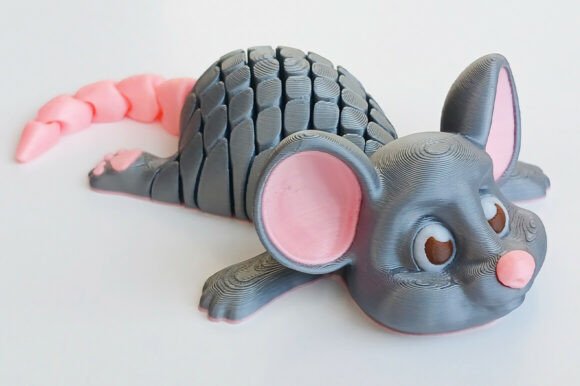
Articulated Mouse 3D Print Model
In the rapidly evolving landscape of digital fabrication, the gap between a static digital file and a tangible, interactive object has never been smaller. For hobbyists, educators, and small business owners alike, the ability to produce objects that are not only visually appealing but also mechanically functional represents a significant leap in creative potential. Among the various categories of additive manufacturing projects, articulated figures have emerged as a favorite for their immediate gratification and tactile satisfaction. One model that exemplifies this intersection of charm and engineering is the Articulated Mouse - Flexi Toy STL 3D Model for 3D Print. This design offers more than just a cute aesthetic; it provides a reliable, print-in-place solution that bridges the gap between complex mechanical assembly and beginner-friendly printing.
The Appeal of Print-in-Place Mechanics
Traditional articulated models often require post-processing steps such as gluing, pinning, or assembling multiple separate components. These processes can be time-consuming and introduce points of failure where joints might become loose or break over time. The Articulated Mouse - Flexi Toy STL 3D Model for 3D Print eliminates these hurdles by utilizing a print-in-place architecture. This means the entire figure is printed as a single continuous piece, with hinges and joints designed directly into the geometry. When the print completes, the mouse emerges from the build plate ready to move, requiring no glue or additional tools.
This approach is particularly valuable for professionals who value efficiency. Whether you are a maker preparing inventory for an online store or an educator demonstrating principles of kinematics to students, the reduction in post-print labor allows for faster turnaround times. The design ensures that the segments remain connected yet mobile, offering a durable alternative to glued assemblies that may degrade with frequent handling. By removing the need for assembly, users can focus on the outcome—whether that is a display piece, a teaching aid, or a product for sale—rather than the mechanics of construction.
Practical Applications for Makers and Sellers
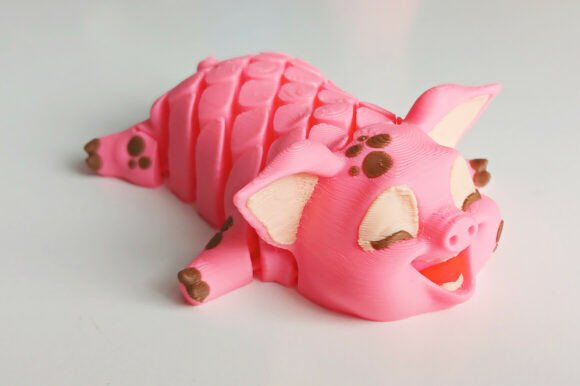
For entrepreneurs and content creators, the versatility of this model extends beyond simple decoration. The Articulated Mouse - Flexi Toy STL 3D Model for 3D Print serves as an excellent example of how small, detailed prints can capture attention in crowded marketplaces. Its stylized appearance, characterized by large ears and a friendly face, makes it highly shareable on social media platforms where visual engagement drives traffic. Creators can use high-quality renders or photos of the moving toy to enhance product listings, providing potential customers with a clear understanding of the item’s dynamic nature.
Furthermore, the model’s dual function as both a desk companion and a fidget toy addresses a growing demand for workplace wellness tools. In professional environments, subtle tactile objects can help maintain focus and reduce stress during long periods of screen time. A seller specializing in ergonomic accessories or office decor could position this mouse as a unique addition to their catalog, differentiating it from standard stress balls or generic figurines. The flexible segmented body invites interaction, making it a satisfying object to handle during brief mental breaks, thereby adding functional value to its decorative appeal.
Optimizing Print Settings for Success
While the design is optimized for reliability, achieving the best results requires attention to specific printing parameters. The Articulated Mouse - Flexi Toy STL 3D Model for 3D Print recommends a layer height between 0.08 mm and 0.20 mm. Using a finer layer height, such as 0.08 mm or 0.10 mm, can improve the smoothness of the articulation by reducing the stair-stepping effect on the curved joint surfaces. However, for those prioritizing speed without sacrificing too much quality, a 0.20 mm layer height remains viable, provided the printer is well-calibrated.
Material selection plays a crucial role in the longevity of the joints. PLA is the recommended material due to its stiffness and ease of printing, which helps maintain the shape of the segments. PETG is also suitable, offering greater flexibility and durability, which may be beneficial if the toy is intended for heavy use by children. Regardless of the material chosen, ensuring good first-layer adhesion is critical to prevent warping, which could misalign the joints. Additionally, allowing the print to cool completely before attempting to flex the mouse helps the plastic settle into its final form, ensuring that the joints remain clean and do not fuse together prematurely.
Support Structures and Design Nuances
One of the thoughtful aspects of this model is its minimal support requirement. Supports are needed only under the mouse ears, which simplifies the removal process and reduces the risk of damaging the delicate features of the character. This design choice reflects a deep understanding of slicer capabilities and printer limitations, making it accessible even to those with less advanced equipment. By minimizing support structures, the surface finish remains smoother, reducing the need for extensive sanding or cleaning that might otherwise dull the toy’s expressive details.
However, users should be aware that fit considerations vary depending on individual printer tolerances. If the joints feel too tight upon printing, slight adjustments to the horizontal expansion settings in the slicer software can create the necessary clearance. Conversely, if the joints are too loose, checking for dimensional inaccuracies in the printer’s X and Y axes may be necessary. This adaptability allows makers to fine-tune the print experience, turning a potential frustration into a learning opportunity about calibration and precision.
Conclusion: A Versatile Tool for Creative Expression
The Articulated Mouse - Flexi Toy STL 3D Model for 3D Print stands out as a practical and engaging project for a wide range of users. Its combination of aesthetic charm, mechanical simplicity, and print reliability makes it a standout choice for anyone looking to add movement and personality to their 3D printing portfolio. Whether used as a tool for education, a product for commercial sale, or a personal delight for desk decoration, this model demonstrates the power of thoughtful digital design. By focusing on user-friendly features and robust performance, it empowers makers to achieve professional results with minimal effort, reinforcing the idea that 3D printing is not just about creating objects, but about crafting experiences.