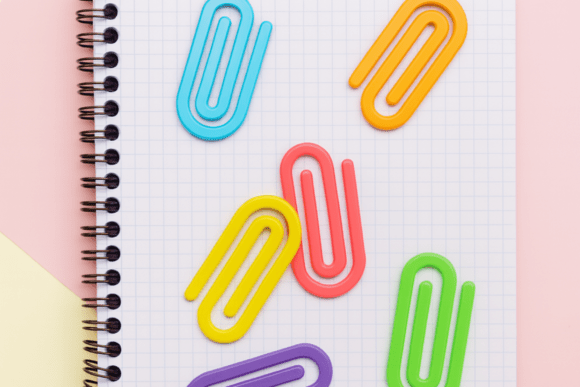
3D Paperclip, Minimal Paperclip: Elevate Your Desk with This Sleek Design
A workspace is more than just a collection of tools; it is an environment that shapes your productivity and mood. While we often focus on high-tech gadgets or ergonomic chairs, the smallest details can have a disproportionate impact on our daily experience. Enter the 3D Paperclip, Minimal Paperclip. This isn't just another piece of office stationery; it is a statement of modern design that bridges the gap between utility and aesthetic charm. By downloading this ready-to-print STL file, you are not merely acquiring a clip for your documents—you are investing in a personalized touch for your desk that combines practicality with style.
Why Choose a 3D Printed Paperclip?
The concept of a paperclip seems simple enough, yet the market is flooded with generic, mass-produced metal clips that bend, rust, or simply disappear into the drawer abyss. A Minimal Paperclip designed for 3D printing offers a distinct advantage: customization and durability. Unlike traditional steel clips that can snap under pressure or leave marks on delicate papers, a well-printed 3D paperclip provides consistent tension and a smooth finish.
Moreover, the ability to choose your color means you can coordinate your organizational tools with your brand identity, your home decor, or even your mood. For entrepreneurs, bloggers, and freelancers who value visual consistency, this small detail matters. It signals attention to detail—a trait that resonates in professional presentations and personal organization alike. The 3D Paperclip serves as both a functional tool and a subtle conversation starter, adding a layer of personality to meetings or study sessions without being overly distracting.
Common Mistakes When Printing Functional Objects
While the idea of printing a paperclip sounds straightforward, many beginners overlook critical settings that determine whether the final product will actually hold papers together or fall apart. Understanding these pitfalls is essential to getting the most out of your 3D Paperclip, Minimal Paperclip STL file.
- Ignoring Infill Density: One of the most common errors is using too low an infill percentage (e.g., 5-10%). While this saves filament, it results in a hollow, fragile structure. A paperclip needs structural integrity to withstand the tension of holding multiple sheets. Aim for at least 20-30% infill to ensure durability without unnecessary weight.
- Overlooking Wall Thickness: Thin walls can lead to weak points where the clip might crack during use. Ensure your slicer settings provide sufficient perimeter lines (usually 2-3 walls) to create a robust outer shell that resists bending beyond its elastic limit.
- Neglecting Orientation: How you orient the model in your slicing software affects print strength and surface quality. Printing the paperclip flat may result in visible layer lines on the gripping surfaces, reducing friction and causing papers to slip. Orienting it vertically or at an angle can optimize layer adhesion and grip.
Material Matters: PLA vs. PETG vs. TPU
Selecting the right filament is perhaps the most decisive factor in the success of your project. Many users default to PLA because it is easy to print, but PLA has limitations when it comes to flexibility and heat resistance.
If you want a rigid, colorful Minimal Paperclip that holds its shape firmly, PLA is a solid choice, provided you avoid leaving it in a hot car or direct sunlight, which can cause warping. However, if you desire a clip that can flex slightly without breaking—mimicking the behavior of metal—consider using PETG or TPU. PETG offers a good balance of strength and slight flexibility, while TPU (Thermoplastic Polyurethane) provides excellent elasticity, making it nearly impossible to permanently deform the clip. For a true "minimalist" look that feels premium, matte-finish PLA or ABS can also yield sophisticated results.
Evaluating the STL File Before You Print
Before hitting the "print" button, take a moment to inspect the digital asset. Not all STL files are created equal. A poorly constructed mesh can lead to print failures, overhangs that require excessive support material, or awkward geometries that compromise function.
Check for manifold geometry, ensuring there are no holes or non-manifold edges in the model. Look closely at the curve of the clip; it should be smooth and continuous. If the design includes intricate details or text, verify that the resolution is sufficient for your printer’s capabilities. High-detail prints require finer nozzles (0.4mm is standard, but 0.2mm or 0.1mm can enhance clarity). Additionally, consider the scale. Some designs are meant to be printed at actual size, while others might be stylized miniatures. Ensuring the dimensions match your expectations prevents disappointment upon unloading the print bed.
Maximizing Usability and Presentation
Once your 3D Paperclip is printed, proper post-processing enhances its longevity and appearance. Remove any support structures gently to avoid scratching the surface. If you used PLA, a light sanding with fine-grit paper can smooth out layer lines, giving it a near-injection-molded finish. For those who enjoy a bit of flair, painting or dyeing the clip can further personalize it, though this requires additional time and skill.
Consider how you display or store these clips. Because they are visually appealing, keeping them in a clear acrylic organizer on your desk turns organization into a decorative act. This approach works particularly well for educators and students who need quick access to supplies while maintaining a tidy workspace. For marketers and content creators, these unique clips can serve as branded merchandise or thoughtful gifts for clients, reinforcing a message of creativity and care.
Final Thoughts on Smart Organizing
The decision to adopt a 3D Paperclip, Minimal Paperclip is about more than just saving money on office supplies; it is about embracing a mindful approach to workspaces. By avoiding common printing mistakes, choosing appropriate materials, and inspecting the source file, you ensure that your investment yields a tool that is both beautiful and reliable. Whether you are a hobbyist exploring the limits of your printer or a professional seeking to refine your daily routine, this sleek design offers a simple yet effective way to elevate your environment. Download the file, experiment with settings, and discover how small changes can make a significant difference in your productivity and satisfaction.